You've been taking ashwagandha for weeks. Maybe even months. You bought a bottle that promised stress relief, better sleep, more energy and you're sitting here feeling exactly the same as before. I get it. In my practice, this is one of the most common frustrations I hear: "I tried ashwagandha and it didn't do anything." …

You’ve been taking ashwagandha for weeks. Maybe even months. You bought a bottle that promised stress relief, better sleep, more energy and you’re sitting here feeling exactly the same as before. I get it. In my practice, this is one of the most common frustrations I hear: “I tried ashwagandha and it didn’t do anything.” But here’s what I’ve learned after years of working with adaptogens: it’s almost never the herb that’s the problem. It’s usually how it’s being taken. Let me walk you through the seven most common reasons your ashwagandha isn’t delivering, and exactly what to do about each one.

What Is Ashwagandha, Really?
Before I explain what’s going wrong, let me quickly clarify what ashwagandha actually is because misunderstanding the herb is often the first mistake.
Ashwagandha (Withania somnifera) is a small evergreen shrub native to India, Africa, and the Middle East. It’s been used in Ayurvedic medicine for over 3,000 years as a Rasayana, a rejuvenating tonic meant to promote vitality and resilience. The active compounds responsible for most of its effects are called withanolides, a group of naturally occurring steroidal lactones that interact with your body’s stress-response system, particularly the hypothalamic-pituitary-adrenal (HPA) axis. Think of the HPA axis as the command centre for how your body handles stress. When it’s overactive, you produce too much cortisol. Ashwagandha’s primary mechanism is helping to regulate that axis, bringing cortisol back into a healthier range (NIH Office of Dietary Supplements Ashwagandha Fact Sheet).
That’s the theory. But whether it actually works for you depends on several factors most people overlook.
1. You’re Taking the Wrong Part of the Plant
This is the single biggest reason I see ashwagandha fail, and most people have no idea it’s even a factor.
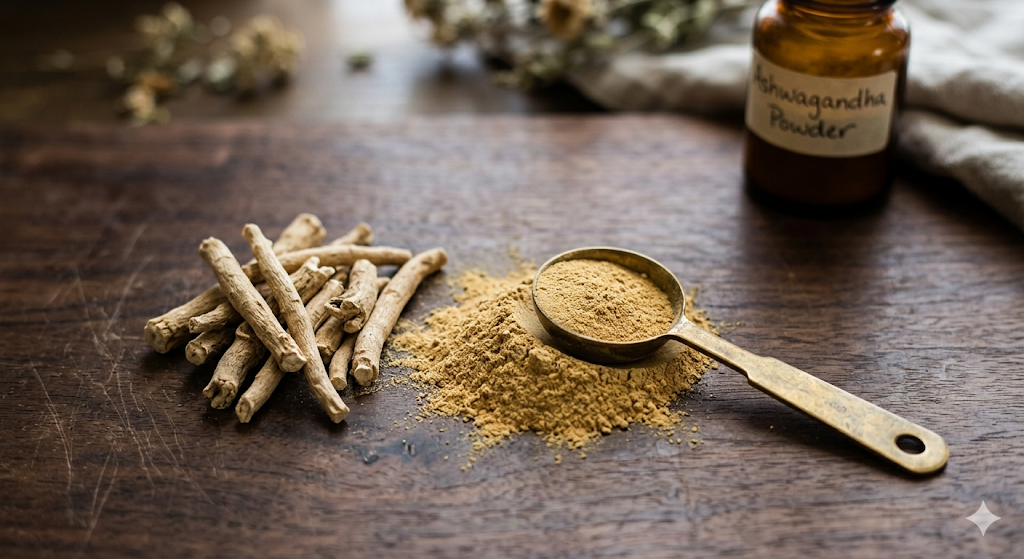
Ashwagandha supplements can be made from the root, the leaf, or a blend of both. The problem is that the chemical profiles of these plant parts are dramatically different. The root is rich in beneficial withanolides like Withanolide A and Withanolide D, the compounds studied for stress reduction and cognitive support. The leaf, on the other hand, contains higher concentrations of Withaferin A, a compound that’s cytotoxic meaning it kills cells. That’s interesting for cancer researchers, but it’s not what you want in a daily wellness supplement (Mind Nutrition Guide to Ashwagandha Extract).
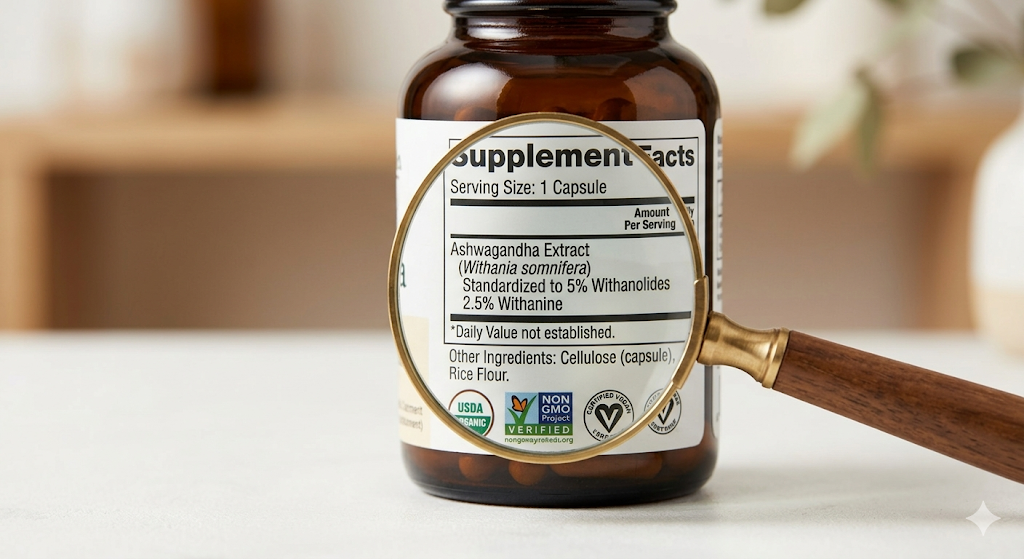
What I tell my patients is simple: flip the bottle over and read the label. If it says “root extract,” you’re on the right track. If it says “aerial parts,” “whole plant,” or just “ashwagandha extract” without specifying, put it back on the shelf. Nearly all the clinical research and there are now over 50 human trials has been conducted on root-based extracts.
The fix: Choose a supplement that clearly states “root extract” on the label, ideally standardised to at least 5% withanolides.
2. Your Dose Is Too Low (or Too Inconsistent)
I see this constantly. Someone buys a multi-ingredient “stress complex” where ashwagandha is listed as one of eight herbs at a dose of 100mg per capsule. That’s not going to do much.
The clinical research paints a clear picture. A 2012 randomised, double-blind, placebo-controlled study published in the Indian Journal of Psychological Medicine used 300mg of KSM-66 root extract twice daily (600mg total) for 60 days and found significant reductions in cortisol and stress scores compared to placebo (Chandrasekhar et al., 2012 PubMed). A 2019 dose-response study found that both 250mg/day and 600mg/day produced meaningful cortisol reduction, with the higher dose showing stronger effects (Lopresti et al., 2019 PubMed).
The sweet spot for most adults? 300-600mg per day of a standardised root extract, taken consistently. Not “when I remember.” Not “only on stressful days.” Every day.
The fix: Take 300-600mg of a standardised root extract daily. Split dosing (morning and evening) is how most clinical trials are structured.
3. You Haven’t Given It Enough Time
This might be the hardest truth for people to accept. We live in a world of instant results, but adaptogens don’t work like painkillers.
Ashwagandha works by gradually recalibrating your stress-response system. That takes time. In the studies that show real results, the intervention period is almost always 8 to 12 weeks not 8 to 12 days. A 2021 study on cognitive function used a 90-day protocol before measuring outcomes, and participants showed significant improvements in memory, stress levels, and sleep quality only after the full duration (Gopukumar et al., 2021 PubMed).
In my practice, I’ve seen people abandon ashwagandha at the three-week mark and declare it useless. I always ask them: would you take a probiotic for ten days and say gut health is a myth? Adaptogens require patience.
The fix: Commit to at least 8 weeks of consistent, daily use before assessing results. Mark your calendar. Set a reminder. Give the compound time to do its job.
4. You’re Taking a Low-Quality or Unstandardised Product
Not all ashwagandha supplements are created equal, and frankly, many of them are barely ashwagandha at all.
The supplement industry is plagued by products that use raw, unprocessed ashwagandha powder rather than a standardised extract. Here’s the difference: raw powder contains very low and inconsistent levels of withanolides, the active compounds that actually produce results. A standardised extract concentrates these compounds to a specific, measurable percentage (typically 2.5-10%), ensuring each dose delivers a therapeutic amount (Total Ingredients Ashwagandha Powder vs Root Extract).
Then there are the branded, clinically studied extracts like KSM-66, which is extracted exclusively from roots using a process free of alcohol or synthetic solvents, and standardised to a minimum of 5% withanolides. It’s the most extensively researched ashwagandha extract available, with over 50 clinical trials behind it (KSM-66 Science). If your supplement doesn’t specify which extract it uses or its withanolide percentage, you’re essentially guessing.
The fix: Look for a branded, standardised root extract (such as KSM-66) with a clearly stated withanolide percentage on the label. Third-party testing is a bonus; it confirms what’s on the label is actually in the capsule.
5. Your Lifestyle Is Working Against It
Here’s something I wish more supplement brands would say: no adaptogen can outwork a broken foundation.
If you’re sleeping four hours a night, running on caffeine, chronically dehydrated, and eating mostly processed food ashwagandha is fighting a battle it cannot win. Research consistently shows that ashwagandha’s benefits are most pronounced in individuals who are already managing stress but need additional support, not in people whose entire lifestyle is a stress generator.
A 2019 study found that ashwagandha’s cortisol-lowering effects were mediated through its modulating action on the HPA axis but this system doesn’t operate in a vacuum. It responds to sleep, nutrition, movement, and overall physiological load (Lopresti et al., 2019 PMC). In my experience, the patients who respond best to ashwagandha are those who are also making fundamental changes: improving sleep hygiene, reducing caffeine after noon, and moving their bodies regularly.
Ashwagandha is a powerful tool. But it’s a complement to a healthy lifestyle, not a replacement for one.
The fix: Before blaming the supplement, audit your basics. Are you sleeping 7+ hours? Eating real food? Moving daily? Ashwagandha amplifies good habits; it doesn’t replace them.
6. You’re Taking It at the Wrong Time
Timing matters more than most people realise, and the “right” time depends on what you’re trying to achieve.
Taking ashwagandha for stress and anxiety? Research protocols typically use twice-daily dosing once in the morning and once in the evening to maintain steady levels of withanolides throughout the day. Taking it for sleep? An evening dose makes more sense, as the species name somnifera literally translates to “sleep-inducing,” and studies on sleep quality have generally used evening administration. A meta-analysis found that ashwagandha’s benefits for sleep were more prominent when the dose was at least 600mg/day and the treatment lasted a minimum of 8 weeks (NIH ODS Ashwagandha Sleep Research).
One more detail: withanolides are fat-soluble. Taking ashwagandha with a meal that contains some healthy fats like avocado, olive oil, nuts may improve absorption.
The fix: For general stress support, split your dose between morning and evening with meals. For sleep, take the full dose in the evening with food.

7. You Expect It to Do Something It Can’t
Let me be direct about this because the internet has inflated ashwagandha’s reputation beyond what the science supports.
Ashwagandha is well-studied for stress reduction, cortisol moderation, sleep quality, and mild anxiety support. There’s emerging evidence for cognitive function and modest testosterone support in men who are stressed or fatigued. But it is not a miracle cure. It doesn’t replace therapy for clinical anxiety disorders. It won’t double your testosterone overnight. And it doesn’t work for everyone.
A 2025 review in Phytotherapy Research noted that while ashwagandha’s effects on the HPA axis are well-documented, some studies found no significant difference between ashwagandha and placebo in certain stress measures particularly in populations that weren’t highly stressed to begin with (PMC Ashwagandha Mechanisms Review). In other words, if your cortisol is already relatively balanced, ashwagandha may not produce a dramatic effect. And that’s okay, it means your body doesn’t need that particular intervention.
The fix: Match your expectations to the evidence. Ashwagandha works best for people dealing with moderate-to-high chronic stress. If that’s not you, another adaptogen or approach may serve you better.
Who Should (and Shouldn’t) Use Ashwagandha
Ashwagandha tends to work best for adults experiencing chronic stress, poor sleep, or stress-related fatigue people whose cortisol is consistently elevated and who need help recalibrating their nervous system.
However, I always tell my patients about the precautions. Ashwagandha may influence thyroid hormone levels, so individuals with thyroid disorders especially hyperthyroidism should consult their doctor before use. The French food safety agency (ANSES) has also advised caution for pregnant women, breastfeeding mothers, and people with liver conditions (NCCIH Ashwagandha Safety). While rare, there have been case reports of liver injury associated with ashwagandha use, particularly with prolonged or excessive dosing (NIH LiverTox Ashwagandha). People on sedatives, immunosuppressants, thyroid medications, or blood-pressure drugs should check with their healthcare provider before starting.
The bottom line? For most healthy adults under stress, ashwagandha is well-tolerated and safe for up to about 3 months of use. Beyond that, take breaks or consult a professional.
How to Choose a Quality Ashwagandha Product
Here’s what I look for and what I advise my patients to look for when evaluating an ashwagandha supplement:
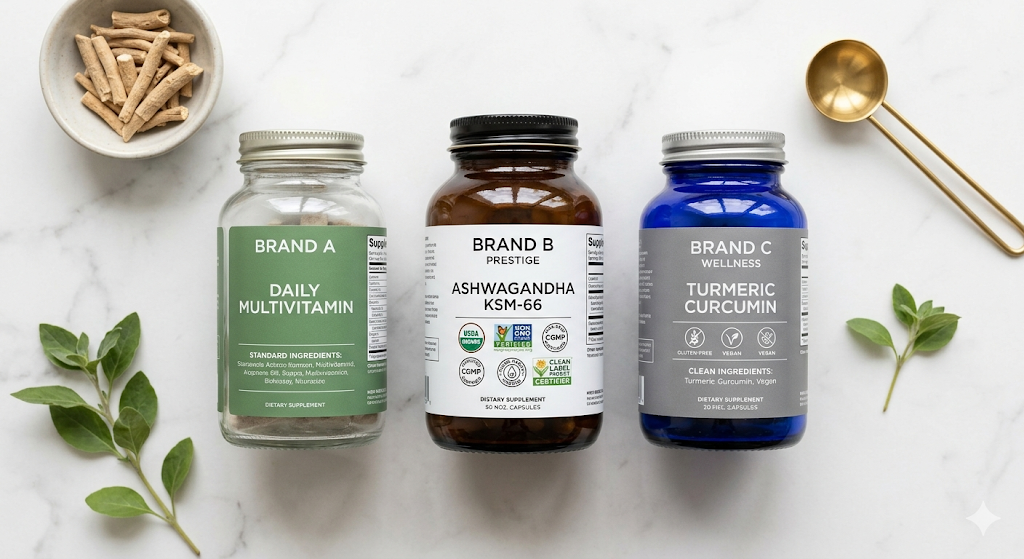
Root-only extract. Not a leaf, not “whole plant.” Root is where the research is, and where the beneficial withanolide profile lives.
Standardised withanolide content. At minimum 5% withanolides. This should be clearly stated on the label. If it’s not listed, the manufacturer probably hasn’t tested for it.
Third-party lab testing. This means an independent laboratory has verified the contents. Look for certificates of analysis (CoA) from recognised labs.
No fillers, binders, or proprietary blends. If the ingredient list is a paragraph long, it’s not a pure product.
Recognised certifications. GMP, ISO 22000, and HACCP are the gold standards in manufacturing quality. These aren’t just logos, they represent audited, verifiable processes.
My Top Recommendation
When patients ask me what I personally use and recommend, I point them to Mendu Herbs KSM-66 Ashwagandha.
After reviewing dozens of ashwagandha products, this one consistently checks every box I care about: it uses KSM-66 root extract, the most clinically studied ashwagandha in the world with no fillers or synthetic additives. It’s third-party tested by Eurofins (one of the world’s largest independent lab networks), and the manufacturing is ISO 22000, GMP, and HACCP certified. They currently hold a 4.7 out of 5 on Trustpilot, which tells me the quality is consistent, not just a one-off batch.
Disclosure: I have no affiliation with Mendu Herbs. I recommend them because they meet the standard I’d set for my own family. If you’re going to invest in ashwagandha, this is what I’d tell a friend to buy.
Key Takeaways
- Most ashwagandha “failures” are caused by the wrong extract, wrong dose, or not enough time, not a problem with the herb itself.
- Always choose a root-only extract standardised to at least 5% withanolides. KSM-66 is the most researched option.
- Give it 8-12 weeks of consistent daily use at 300-600mg before judging results.
- Support it with lifestyle basics: sleep, nutrition, movement. Ashwagandha amplifies it, but doesn’t replace it.
- Know the limits: it’s best for chronic stress and cortisol moderation. It’s not a cure for clinical conditions, and it’s not for everyone.
FAQ
How long does ashwagandha take to work?
Most clinical studies show measurable results after 8 to 12 weeks of daily use. Some people report subtle changes in sleep or mood within 2 to 4 weeks, but the full adaptogenic effect takes longer. Consistency is key taking it sporadically won’t produce the same results as a daily protocol.
Can I take ashwagandha every day?
For most healthy adults, yes. Clinical trials have safely used daily dosing for up to about 3 months. However, long-term safety data beyond that window is limited. What I recommend in my practice is cycling: 8-12 weeks on, followed by a 2-4 week break, then reassess how you feel.
What’s the difference between KSM-66 and regular ashwagandha powder?
KSM-66 is a standardised root extract with a guaranteed minimum withanolide content of 5%, backed by over 50 clinical trials. Regular ashwagandha powder is ground dried root with much lower and inconsistent withanolide levels. You’d need to take significantly larger amounts of raw powder to match the therapeutic dose of a standardised extract.
Is ashwagandha safe during pregnancy?
Most experts and regulatory bodies including NCCIH and the French food safety agency ANSES advise against using ashwagandha during pregnancy. While the evidence is not conclusive, there have been traditional references to abortifacient properties. Until we have definitive safety data, I recommend erring on the side of caution and avoiding it entirely during pregnancy and breastfeeding.
What are the side effects of ashwagandha?
Common side effects are mild and include stomach upset, loose stools, nausea, and drowsiness. Rare but more serious reports include effects on liver function, particularly with prolonged use or in people with pre-existing liver conditions. Ashwagandha may also influence thyroid hormones, so those with thyroid disorders should consult their doctor first.
Can ashwagandha increase testosterone?
Research suggests it may modestly support testosterone levels, particularly in men who are chronically stressed or fatigued. One crossover study in overweight men aged 40–70 found an increase in testosterone of about 14.7% compared to placebo. However, for men with already-normal hormone levels, the effect is typically small or not statistically significant. It’s not a testosterone replacement therapy.
Does it matter what time of day I take ashwagandha?
It can. For stress management, split dosing (morning and evening) with meals is the most common clinical protocol. For sleep support, an evening dose with food is more appropriate. Since withanolides are fat-soluble, taking ashwagandha with a meal containing healthy fats may improve absorption.
References
- NIH Office of Dietary Supplements Ashwagandha: Is It Helpful for Stress, Anxiety, or Sleep? Health Professional Fact Sheet. https://ods.od.nih.gov/factsheets/Ashwagandha-HealthProfessional/
- Chandrasekhar K, Kapoor J, Anishetty S (2012) A prospective, randomized double-blind, placebo-controlled study of safety and efficacy of a high-concentration full-spectrum extract of ashwagandha root in reducing stress and anxiety in adults. Indian Journal of Psychological Medicine, 34(3), 255–262. https://pubmed.ncbi.nlm.nih.gov/23439798/
- Lopresti AL, Smith SJ, Malvi H, Kodgule R (2019) An investigation into the stress-relieving and pharmacological actions of an ashwagandha extract. Medicine (Baltimore), 98(37), e17186. https://pmc.ncbi.nlm.nih.gov/articles/PMC6750292/
- Lopresti AL, Drummond PD, Smith SJ (2019) A randomized, double-blind, placebo-controlled, crossover study examining the hormonal and vitality effects of ashwagandha in aging, overweight males. American Journal of Men’s Health, 13(2). https://pmc.ncbi.nlm.nih.gov/articles/PMC6438434/
- Gopukumar K et al. (2021) Efficacy and safety of ashwagandha root extract on cognitive functions in healthy, stressed adults. Evidence-Based Complementary and Alternative Medicine. https://pubmed.ncbi.nlm.nih.gov/34858513/
- Salve J et al. (2019) Adaptogenic and anxiolytic effects of ashwagandha root extract in healthy adults: A double-blind, randomized, placebo-controlled clinical study. Cureus, 11(12), e6466. https://pubmed.ncbi.nlm.nih.gov/32021735/
- NCCIH Ashwagandha: Usefulness and Safety. https://www.nccih.nih.gov/health/ashwagandha
- NIH LiverTox Ashwagandha and Liver Injury.https://www.ncbi.nlm.nih.gov/books/NBK548536/